Posts

Book in Review: Mere Hope

Image
Mere Hope is a brief book about the growing cynicism of our time, which has most definitely seeped into our churches. Jason Duesing calls us to a renewed gospel hope rooted in its Savior who reigns inside of us. A few years ago I detected in myself a malignant escapism growing in my spirit. I had then watched several friends of mine stray from the faith, and all around things seemed to be growing darker and darker. What my natural response was then, and at times is now, was to withdraw into the inner chambers, to lock the door with the handle and the bolt. With “no trespassing” signs on my lawn and a shotgun in my closet I would make it through. Even with gritted teeth, I would make it through. Duesing’s book is a needed reminder to me that we have great cause for hope, and it is not in ourselves or in our determined mental makeup. He reminds us that we need to look down at our gospel hope, look at Christ’s reign within, look out at the hope for the nations, and look above ...

Chancellorsville – Stephen Sears

Image
Chancellorsville is my first book by Stephen Sears. It is thick in content and thorough in the extreme. I can tell you right now that it will not be my last of this author. Sears begins by providing the context of the fateful battle. He discusses the previous failure of the Army of the Potomac under Ambrose Burnside five months earlier at Fredericksburg: the unimaginative hurling of men before superior Confederate positions and the slaughter that ensued. In comes Joseph Hooker, a general I had previously thought of as brash and foolhardy—just another name to add to the pantheon of incompetent Union generals. Sears, however, makes the case that Hooker’s failures in the Chancellorsville campaign were less due to him directly (as was the case with his predecessors)—and more due to the failures of those immediately beneath his command, as well as some plain bad luck. It is difficult to imagine a more difficult job than Commanding General of the Army of the Potomac at the s...

Ponderings on "The Abolition of Man"

Last week I read through a short book entitled The Abolition of Man. Upon completion, my head was spinning from the exercise of attempting to track with its author's (C. S. Lewis) logic. The following week I listened to the audio version (as well as some lectures from Hillsdale College) which helped considerably. I am currently reading through it again because this book is that important. There is no question: we are observing the fulfillment of Lewis's prophecies day by day. Lewis starts off The Abolition of Man by addressing a small quotation from an educational work for "the upper forms of schools" (what he calls the Green book) which states in summary that our feelings having no real relation with things outside of us. Lewis takes this small statement and shows how, when it follows its logical path, will inevitably lead to the abolition of man. Lewis argues that If we teach the young that our emotions do not correlate with anything outside of us we will...

Book in Review: Preaching By The Book

Image
Good Primer; Lacking in Examples Preaching by the Book provides a formulaic step by step approach to producing "text-driven" sermons. Pace is a big proponent of the expositional model in which each sermon point branches off of the one textual big idea. In this short book he provides an excellent summary of sound Biblical interpretation methodology, as well as a very helpful sermon drafting process. There are many streams of wisdom throughout! I appreciated Pace's understanding of the centrality of the Holy Spirit and His involvement in the entire preaching process. The Spirit wrote the Scriptures, helps us understand and communicate the Scriptures, and He convicts the hearts of the listeners with the Scriptures. Unless the Lord builds the house, they labor in vain that build it--and as preachers we need to ensure we are doing none of this in our efforts alone. I will say that Pace's preaching model seems a little too rigid. He presents a good exegetical ...

Two Kinds of Prophets

There are two kinds of truth speakers. Two kinds of prophets. 1) Detached Proclaimers: There are men today like Jonah, who have the message of the coming wrath from the Lord; and like Jonah they proclaim the message in outward obedience. This is great, and something to celebrate! But these men are detached from their message, and their hearts do not break for their hearers. They care little whether or not fire and brimstone rains from heaven in the end. These Jonahs do what they have been called to do, sometimes effectively--but they do so out of obligation. There are many who are like Job's good friend Eliphaz, a man who seemed to have a high view of the transcendent God and a developed doctrine of the depravity of man. When I read what Eliphaz says throughout Job, I nod in agreement: "this guy is pretty close to right!" Indeed, "Can a mortal be more righteous than God? Can even a strong man be more pure than his Maker?" And yet his harsh speech h...

Stop Saying: "That's Just my Opinion"

Image
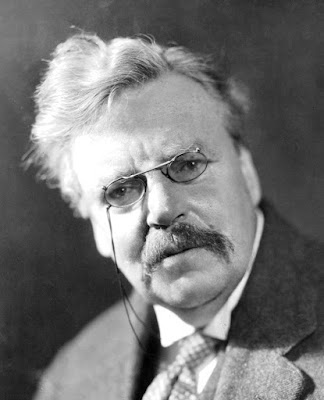
One of the reasons G. K. Chesterton is entertaining to read is because he was so opinionated. He had definite positions on virtually every topic, ranging from: religion to politics to literature to cheese. His essay on cheese is a personal favorite. He wrote entire books calling out prominent figures in his day who had opinions that differed from his, bludgeoning them with pointed verbal diatribes, all in good fun of course. Mostly. But aside from this being very entertaining to read, Chesterton reminds us that opinions are important things. Maybe the most important. If it is true that we live in a world that relates to Truth, a world in which there is Right and Wrong, a world in which souls result in the eternal outcomes of salvation and damnation--it is important that we have fixed beliefs on these things. Beliefs which relate correctly with the truth. Unfortunately, we live in a time where truth, doctrine, viewpoints, opinions are downplayed as secondary, and where rela...

Book in Review: Antietam

Image
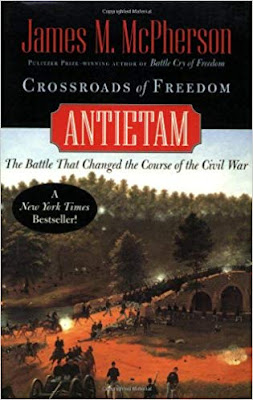
James McPherson is as close to authoritative as Civil War historians get. Having a few years ago read his excellent Battle Cry of Freedom , I enjoyed picking up this much slenderer volume on the turning point of the war: Antietam. Like the best historians, McPherson loads his narrative with swaths of direct quotations from an array of sources: newspapers, soldier's journals, officers, foreign dignitaries...etc. With this information he spends over half of the book setting the stage for Antietam. We learn about the extreme sway of morale as the conflict evolved, the Union success on the Western Front, and the Confederate success of Second Manassas. These events provide needed context for the clash to come. There is little question that the Battle of Antietam is the turning point of the Civil War. So much hinged on the outcome of one day. A Confederate victory would have likely pushed voters in the North to support the Democrats--a party looking for peace. On top of that, a...